PhD Tools: Tea
All parts
- PhD Tools: Beeminder Aug 2016
- PhD Tools: Visualise Structure and Kanban Flow with Trello Aug 2016
- PhD Tools: Think better with Tinderbox Aug 2016
- PhD Tools: DevonThink for File Storage and Discovery Aug 2016
- PhD Tools: Save your web links with Pinboard Aug 2016
- PhD Tools: Scrivener for Writing Long Things Aug 2016
- PhD Tools: Bookends for Managing References Aug 2016
- PhD Tools: Mellel for Layout and Final Presentation Sep 2016
- PhD Tools: RescueTime for Time Tracking Sep 2016
- PhD Tools: Turn Off the Internet with Freedom Sep 2016
- PhD Tools: Backup Systems for Staving off Sadness Sep 2016
- PhD Tools: Omnifocus for Managing your Non-PhD Life Sep 2016
- PhD Tools: The Secret to Finishing Your PhD Sep 2016
- PhD Tools: Vitamin-R and the Pomodoro Technique for Getting Going Sep 2016
- PhD Tools: Freewriting and Journalling to Think Through your Work Sep 2016
- PhD Tools: Pen and Paper Sep 2016
- PhD Tools: 'Always return to your primary sources' Sep 2016
- PhD Tools: Goodreads for Cross-Pollination Sep 2016
- PhD Tools: Sleep and Movement to Nourish the Body Sep 2016
- PhD Tools: Tea Sep 2016
[This is part of a series on the tools I used to write my PhD. Check out the other parts here.]
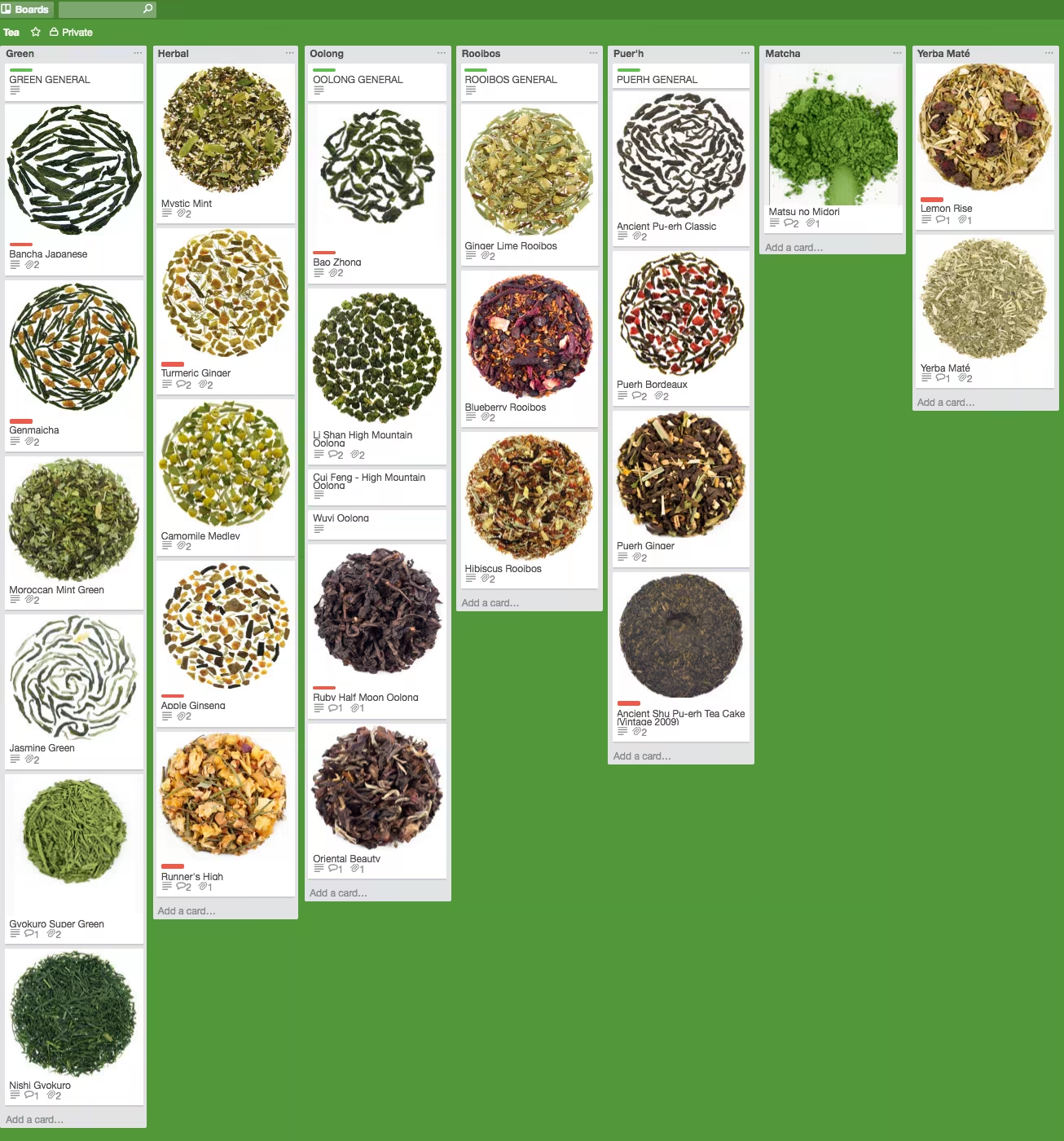
This will be the last post in my PhD Tools series. I thought I’d end with something a little less serious, though still potentially of use.
Around the time I started working intensely on my PhD, I became a little obsessed with tea. Looking back, I can see the traces of procrastination around this ‘learn-about-tea’ project. I put together a Trello board to track the different types of leaves I was trying. I read books about the cultivation of tea. I corresponded with various companies about how they source their products. (Sidenote, I settled on Rishi Tea as the best company selling tea online. Hopefully I’ll be able to get them to record a podcast on Sources & Methods soon).
My Perfect Four Hours, for the record, were fuelled by two cups of Oolong tea. I’ve discovered over the years that I’m particularly sensitive to green tea, (which gives you a dose of theine rather than the better-known caffeine), such that one too many cups will have my hands shaking and my body unable to think or work in any useful way.
You’ll need to figure out your maximum sensitivity point, but for most people I’d suggest it probably is one cup less than whatever you’re currently drinking. There’s a tendency (especially with coffee drinkers) to think that more is better. More coffee = better focus, more awake, etc. In reality, as I think many would admit, you reach a point of diminishing returns. I don’t drink coffee, though I did in the past and I remember that feeling.
That said, some kind of stimulation in the form of green tea or coffee can be really useful when starting your core work sessions. It takes 20-30 minutes for the chemical components of tea or coffee to have their effect on your brain, so it can even make sense to have your first cup before you leave your house. That way you’re hitting your first session at your peak.
I hope that this series has been useful for some of you. If there’s a particular topic or problem that you feel it would be useful for me to write more about (or cover afresh), let me know over on twitter. I also offer (paid) consultancy on these productivity issues, so if you feel you’d like to discuss your particular situation in more detail, drop me a line.
Get new posts by email
Every new post, technical and personal, sent when I publish. Unsubscribe any time. Prefer a feed reader? There's technical RSS and personal RSS.