Reading the Taliban: Himal Magazine article
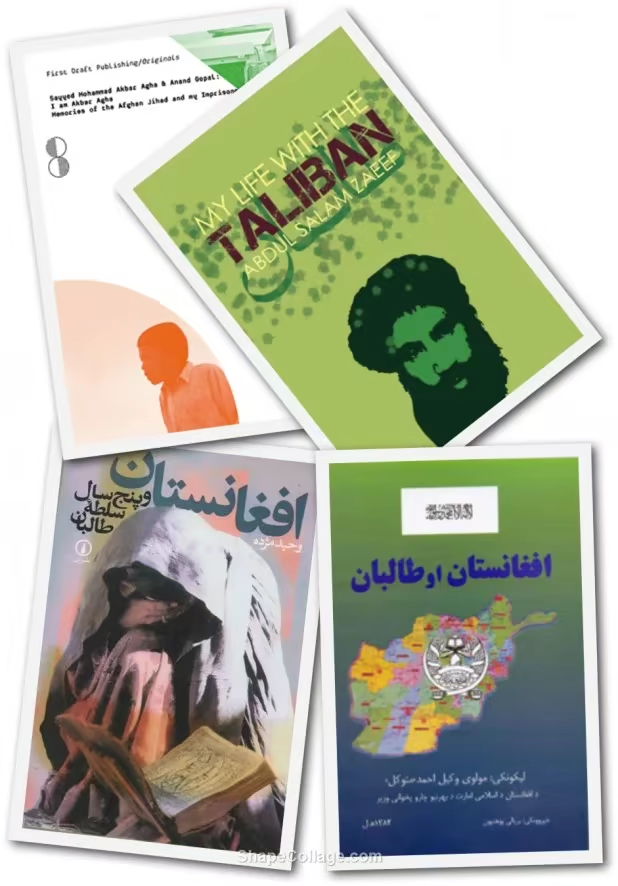
An article I wrote for Himal Magazine back in 2014 has just been released on their website in a digital format. It’s a bit dated, and there have since been a number of significant developments in terms of the availability of primary sources, but I wouldn’t change the overall shape of the argument. The nub of what I tried to say was this:
“These sources allow for a far fuller and rounded portrayal of the Taliban, both as individuals and as a movement. It is only through understanding the viewpoints of those in senior leadership positions – as expressed in statements, poems or internal memos – that one can arrive at an understanding of why certain decisions were taken, and get more of a sense of the Taliban’s social identity. It is not enough to view the Taliban through an Islamist lens, or a Pashtun lens for that matter. From the 1980s onwards, the Taliban’s identity was subject to change, with different groups and individuals following different paths in the ever-changing environment the movement found itself in. These processes continued after 9/11, and a nuanced and detailed understanding of the evolution of the Taliban and their identity will prove to be a valuable and instructive exercise.”
This also happens to be the justification for my current work finishing up The Taliban Reader, a sourcebook and reference tool which will hit bookshelves in the spring. For the full Himal article, go here.